

What the Rehab Room Taught Me About the Boardroom
23 September 2026

Early in my clinical career, I made a call that went against everything the data was telling me.
An athlete, fit on paper, every marker green, wanted to train. The numbers said go. Something in how they moved, how they talked, how they were carrying themselves that morning, said don't. I held them back. It wasn't a popular decision in the moment, and I couldn't have handed you a clean, evidence-referenced justification for it on the spot. But I'd stood in enough rooms like that one to know the difference between a number that says ready and a person who is.
I've thought about that moment a lot in the years since, because the skill underneath it turned out to be the most transferable thing I own. And almost nobody talks about it as a business skill.
Two worlds that don't speak
I spent the first part of my career as a physiotherapist, in the NHS, in New Zealand, in sport. High-stakes, high-consequence, decisions made now with incomplete information and a real cost attached to getting them wrong. Then I bought a healthcare business, scaled it for over a decade, and took it through to exit. Different room, same discipline.
What I noticed moving between the two is that clinical and commercial worlds are both rigorous, both full of intelligent people, and often struggle to hear each other.
A clinician walks into a commercial conversation and leads with evidence, mechanism, why the thing works. An investor or a board is listening for something else entirely: risk, return, timing, what this means for the number they're accountable for. Both parties are being completely reasonable. They're just optimising for different things, in different languages, and the value gets stranded in the gap between them.
Most people treat that gap as a problem to be escaped, get out of clinical, retrain, become "commercial." I don't think that's right. The gap is the most valuable place to stand, precisely because so few people can stand in it credibly.
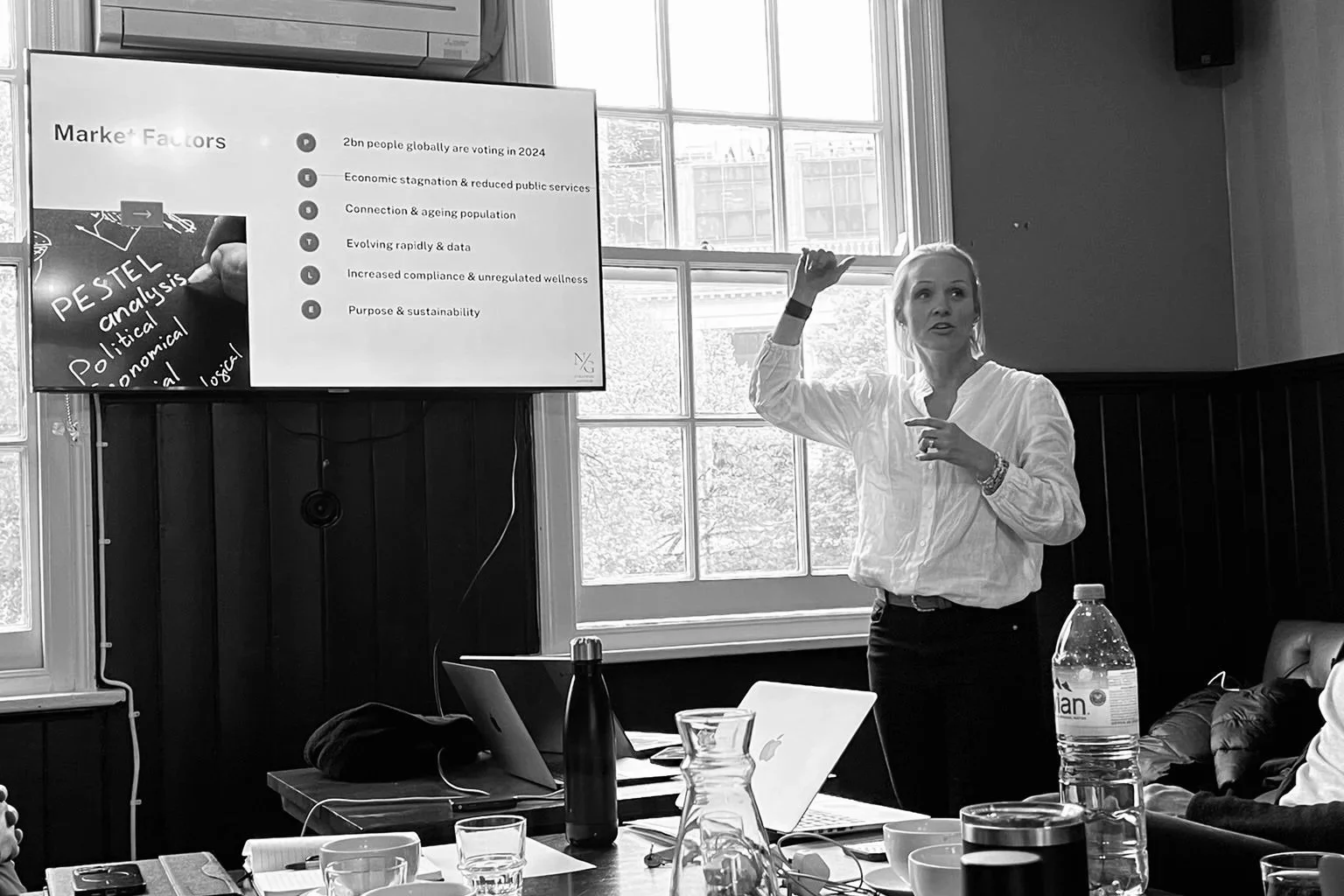
What the practitioner actually brings
The advantage of having done the clinical work isn't the clinical knowledge itself. It's the judgement that clinical work builds, and the fact that it turns out to be exactly what high-stakes commercial decisions require.
Clinical training is pattern recognition under pressure. Assessing probability and severity. Acting before the picture is complete, because waiting for certainty is itself a decision, usually the wrong one. That's not a bedside skill. That's how you read a market, a deal, a team, a risk nobody else has seen yet.
It's also a particular relationship with being wrong. In clinical practice you make consequential calls knowing you might be, and you own the outcome either way. You don't get to hide behind the framework. That habit, deciding, committing, and standing behind the trade-off, is rarer in boardrooms than you'd think, and worth more than almost anything on a CV.
The practitioner who can carry that into a commercial setting isn't a clinician who learned business. They're someone who can see both boards at once, and translate honestly between them.
Why it matters now
Health, sport and performance are being reshaped by capital and technology faster than either the clinical or the commercial world can keep pace with alone. The products that will matter are the ones where real evidence meets real commercial discipline. And that meeting doesn't happen by accident. It needs people who've genuinely lived on both sides, who can hold clinical credibility and commercial reality in the same hand without dropping either.
That athlete I held back, all those years ago, went on to compete when it counted. I still couldn't give you a spotless dataset to justify the call. But I'd make it again, for the same reason I now back judgement over consensus in a boardroom: the number tells you what happened. It doesn't always tell you what to do next.
That's the practitioner's advantage. Not knowing more. Knowing how to decide when knowing isn't enough.
The newsletter goes deeper.
Weekly thinking on decision-making, sport, and where the questions haven't caught up yet. Delivered every Thursday.
